

What are Supply Chain Operating Networks? Why are they more important than ever today? What factors matter most when evaluating and selecting a network platform?
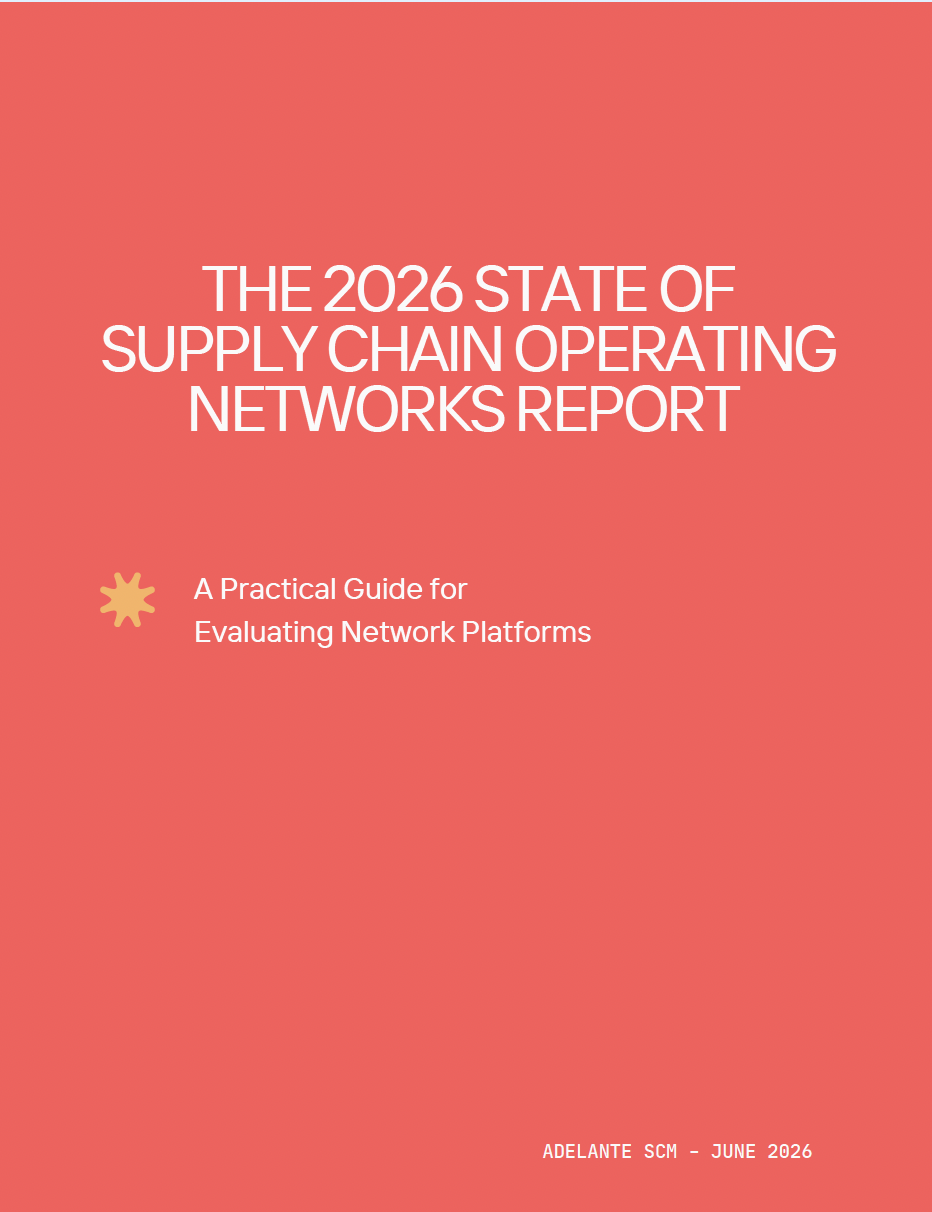
Those are among the key questions addressed in the recently published The 2026 State of Supply Chain Operating Networks research report.
For more than two decades, I have researched, written, and spoken extensively about the role of network-based platforms in supply chain management and logistics. Many of my past research reports, blog posts, and market perspectives on Supply Chain Operating Networks — available at BetterWithANetwork.com — informed the development of this report.
In addition, we conducted an extensive survey with leading Supply Chain Operating Network providers in January 2026 to gather quantitative and qualitative insights on market positioning, network characteristics, platform capabilities, interoperability, onboarding models, AI and analytics capabilities, and perspectives on the current and future state of the market.
Why This Research Matters
Supply chains today are more interconnected, more data-intensive, and more dependent on external partners than ever before. As a result, an increasing share of supply chain performance is influenced not only by what happens within a company’s four walls, but also by how effectively it connects and collaborates with suppliers, carriers, logistics providers, customers, and other trading partners.
This is where Supply Chain Operating Networks play an increasingly important role.
However, despite their growing importance, many organizations still struggle to answer basic questions about the category:
- What exactly is a Supply Chain Operating Network?
- How do these platforms differ from traditional enterprise applications?
- How should companies evaluate competing providers?
- What characteristics most directly influence long-term value and success?
These questions are equally important to both supply chain practitioners evaluating solutions and technology providers seeking to educate the market.
Key Findings
Among the findings from the research:
Supply Chain Operating Networks have reached significant scale. Most surveyed providers reported networks comprising hundreds of thousands of connected entities and transaction volumes measured in the billions annually.
Connectivity alone is no longer a meaningful differentiator. Support for APIs, EDI, portals, and related integration methods has become commonplace. The more important differences increasingly relate to data harmonization, onboarding approaches, network participation, and execution capabilities.
Network effects are real, but not automatic. While many providers emphasize connection reuse and network leverage, realizing those benefits often depends on participant engagement, process standardization, and onboarding effectiveness.
AI is rapidly becoming a core element of provider positioning. However, the effectiveness of AI remains closely tied to the quality of underlying data, the depth of network participation, and the maturity of operational workflows.
Addressing the Evaluation Gap
As I wrote in an April 2024 blog post titled, “Why Nobody Sends Out An RFP For Supply Chain Operating Networks,” companies rarely issue formal RFPs for Supply Chain Operating Networks because they often lack a clear framework for evaluating them.
Many organizations struggle to define what these platforms are, how to quantify their value, who should own network initiatives, and which evaluation criteria matter most. As a result, buying decisions frequently rely on product demonstrations, feature comparisons, or vendor narratives rather than a structured assessment of the factors that determine real-world success.
To help address this challenge, the report includes a comprehensive Evaluation Framework designed to help organizations evaluate Supply Chain Operating Networks more effectively. Rather than focusing primarily on features and functionality, the framework emphasizes the factors that most directly influence long-term performance and value realization, including application scope, network relevance, onboarding, interoperability, data quality, network effects, analytics, AI, security, governance, and ecosystem viability.
A Resource for Both Practitioners and Providers
For manufacturers, retailers, distributors, and other supply chain organizations, the report provides a practical framework for understanding, evaluating, and selecting network platforms based on the factors that matter most in practice.
For technology providers, the research offers an independent perspective on how the market is evolving, where provider positioning is converging, and where meaningful differences remain.
Ultimately, Supply Chain Operating Networks represent a shift in how companies design and operate their supply chains. While enterprise applications remain essential, an increasing share of supply chain performance now depends on how effectively organizations connect, collaborate, and execute processes across their broader ecosystem of trading partners.
The 2026 State of Supply Chain Operating Networks report is intended to help both practitioners and providers better understand that shift and make more informed decisions about the role of networks in the future of supply chain management.
For more information about the report, including purchasing options and a sample executive preview, please contact me.