

In a February 2025 Wall Street Journal article titled, “Humanoid Robots Finally Get Real Jobs,” Christopher Mims writes, “As global demand for new kinds of robots has shot up, mass manufacturing and falling costs for components are making [humanoid robots] cheaper to produce. Just as important, new kinds of AI — some close kin to the kind that has upended the priorities of tech companies and governments since the debut of ChatGPT — are animating robot bodies in ways that simply weren’t possible even a few years ago.”
This article prompted us to ask members of our Indago supply chain research community for their perspectives on humanoid robots and whether these technologies will find a place in their operations. While the concept has long been the subject of science fiction, advances in artificial intelligence and robotics are fueling renewed attention and investment. But are logistics organizations ready to embrace humanoid robots?
Current Adoption: Rare, but Interest is Emerging
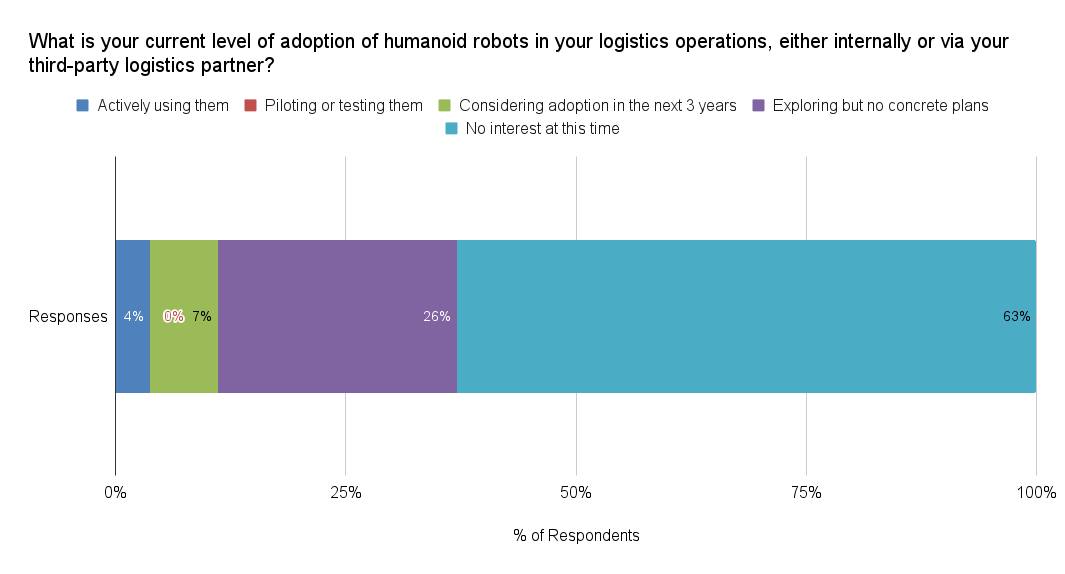
So far, adoption is almost nonexistent, at least among our Indago members. Only one respondent reported actively using humanoid robots in their logistics operations — specifically for picking and packing tasks. The majority (63%) have no interest at this time, while about a quarter (26%) said they are exploring possibilities but have no concrete plans yet.
As one respondent put it:
“In my opinion, it is too early to speculate. I am sure the technology will continue to evolve at lightning speed, [but] I am certain that I will not see it during my career.”
Where They Might Fit: Picking, Packing, and Beyond
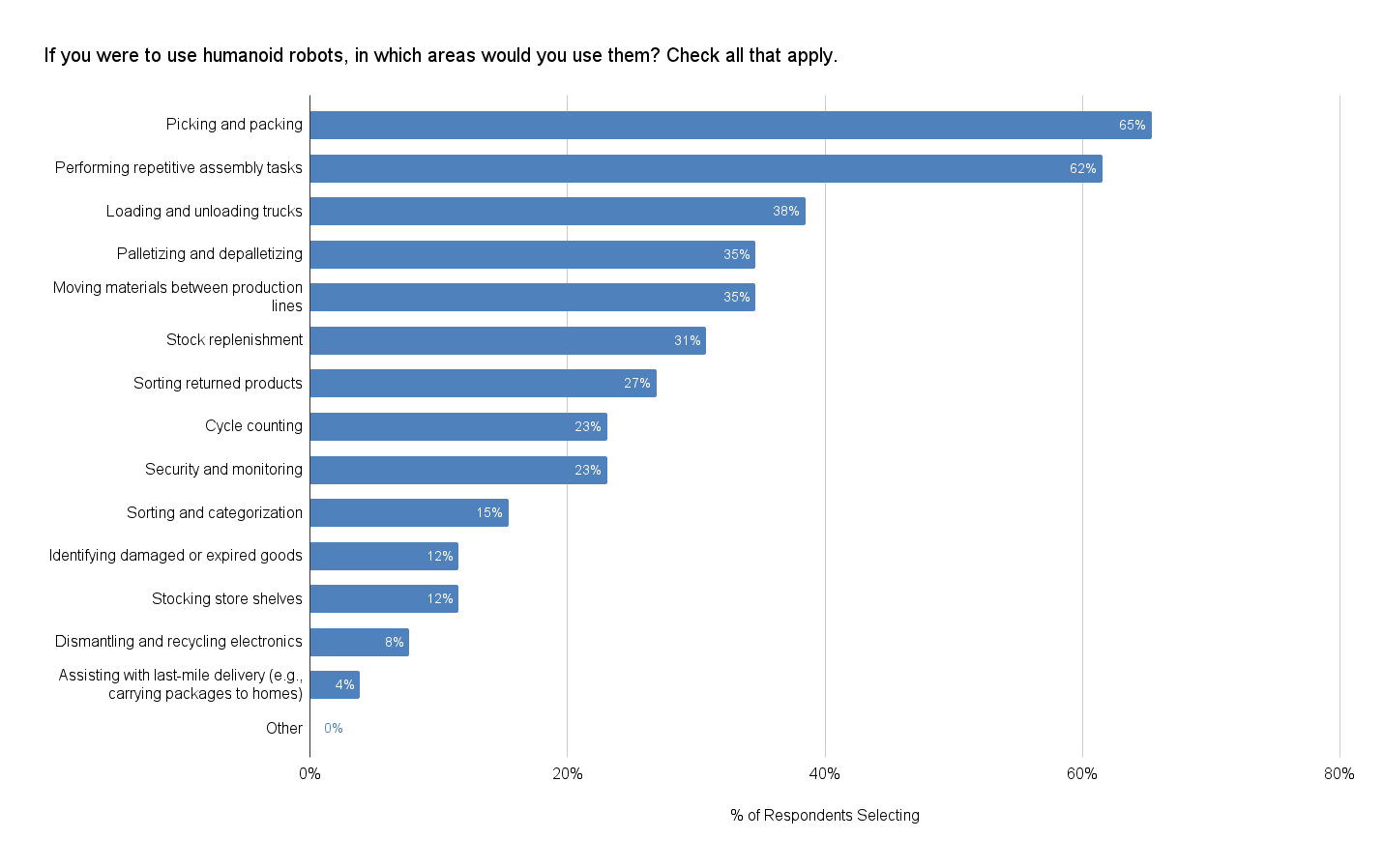
When asked about potential applications, picking and packing (65%) came out on top, followed closely by repetitive assembly tasks (62%) and loading/unloading trucks (38%).
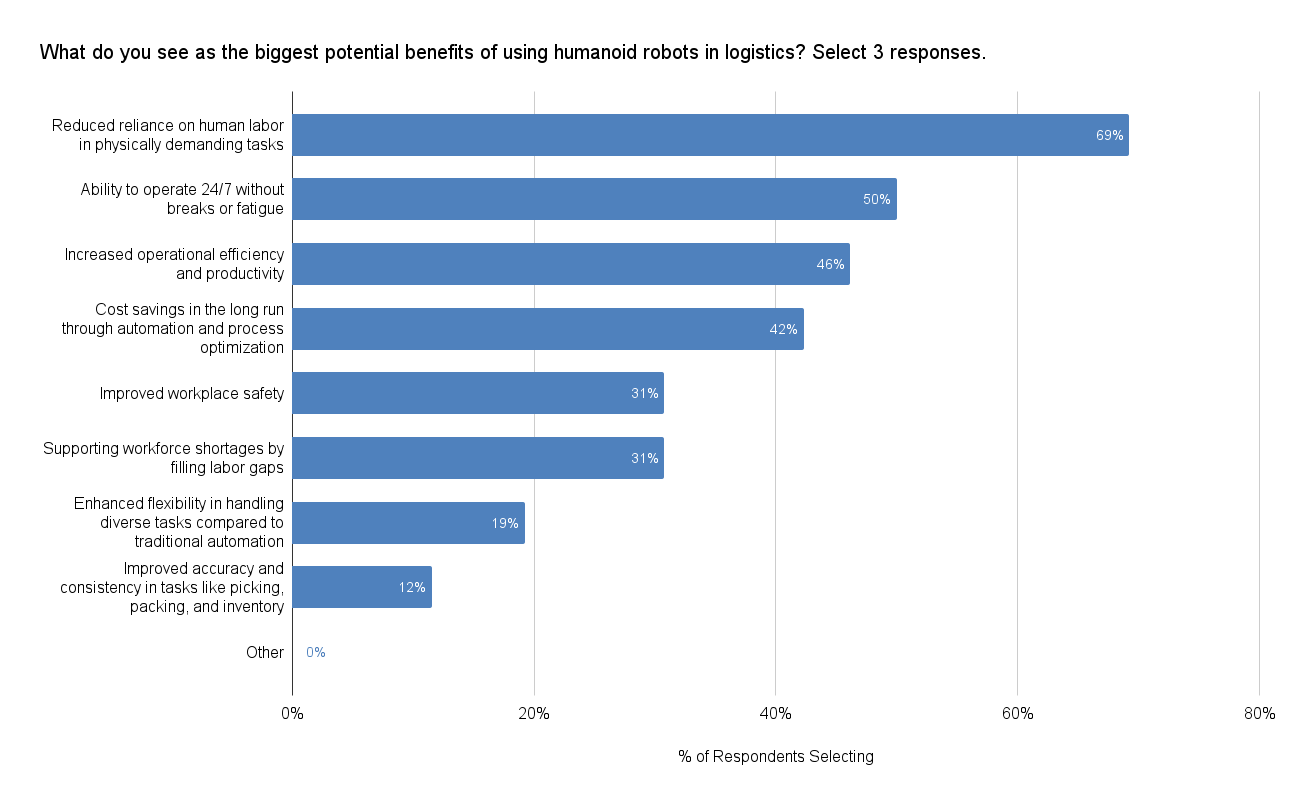
Respondents also highlighted possible benefits, with reduced reliance on human labor in physically demanding tasks (69%) topping the list. Other top choices included 24/7 operations without fatigue (50%) and greater efficiency and productivity (46%).
Still, skepticism remains:
“I don’t feel humanoid robots are the way logistics will go moving forward, at least not in a distribution center or manufacturing site. There is no need for the added expense of a humanoid robot when a regular robot will do just fine.”
Barriers to Adoption: High Costs and Limited Proof
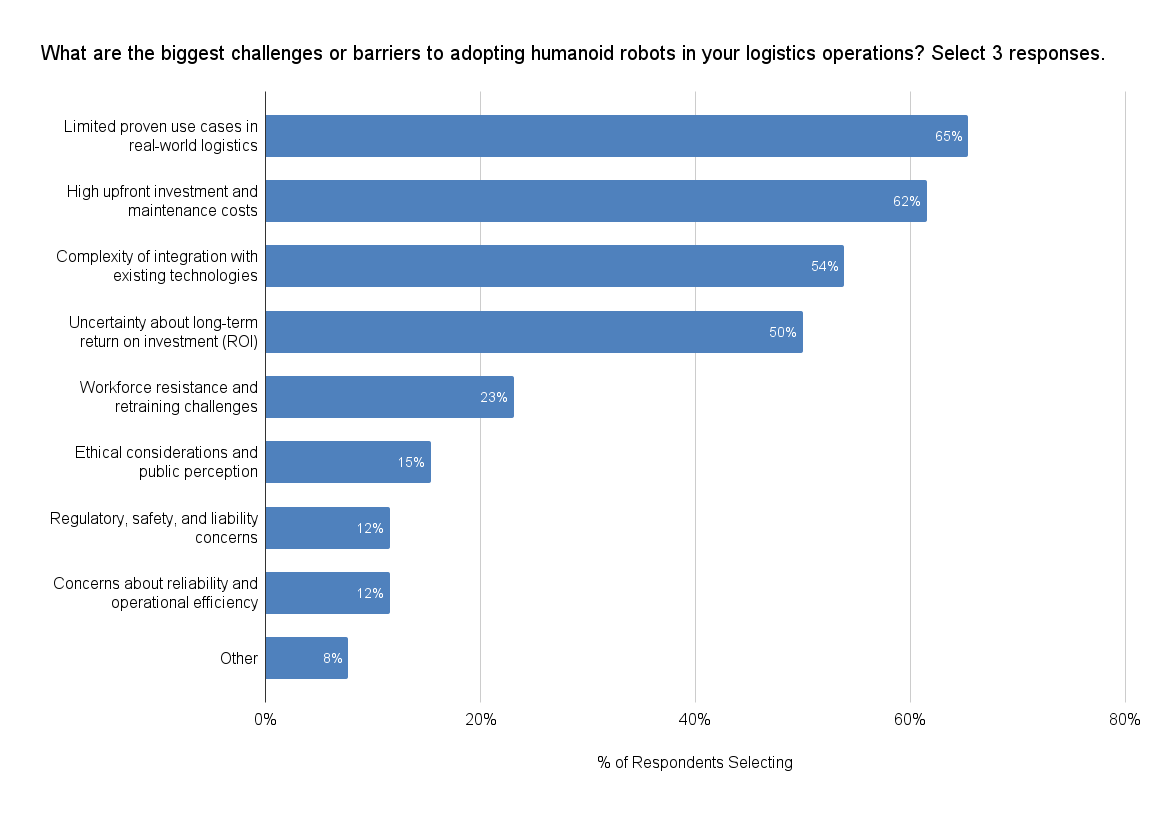
The challenges are clear. The top barrier cited was the lack of proven use cases in real-world logistics (65%). This was followed by high upfront and maintenance costs (62%) and complex integration with existing systems (54%).
As one executive explained:
“Clear use cases where there is a validated return on investment would be needed for humanoid robots to become mainstream. Otherwise, this is just a ‘fun technology.’ Until their cost to own and operate comes down, we will get more [productivity] with humans.”
We also asked our members, “How comfortable do you think employees in your organization are (or would be) working alongside humanoid robots?” For insights on that question and more, please download the report.
The bottom line is that supply chain and logistics executives are intrigued but cautious about using humanoid robots in their operations today. They’re waiting for proof of real-world value, lower costs, and workforce acceptance. Whether humanoid robots will reshape logistics in the next few years — or remain a novelty — depends on how quickly these hurdles are overcome.
How about you? How do you envision the role of humanoid robots evolving in logistics over the next 5 years? What would need to happen for humanoid robots to become a mainstream technology in logistics? Post a comment and share your perspective!