

In response to the Covid pandemic and other disruptions, many companies shifted from Just-in-Time to Just-in-Case inventory strategies. But as demand normalized, many warehouses were left with growing amounts of “Zombie Inventory” — slow-moving, obsolete, or no-longer-needed items that tie up valuable warehouse space, working capital, and management attention.
Just how big is the zombie inventory problem?
To find out, we surveyed our Indago members — supply chain and logistics executives from manufacturing, retail, and distribution companies — in December 2025.
Most respondents indicated that zombie inventory was present but generally contained. Roughly three-quarters estimated that 15% or less of their inventory value was obsolete or excess, split evenly between those reporting less than 5% and those in the 5–15% range. At the same time, one in four respondents reported that more than 16% of their inventory could be classified as zombie stock.
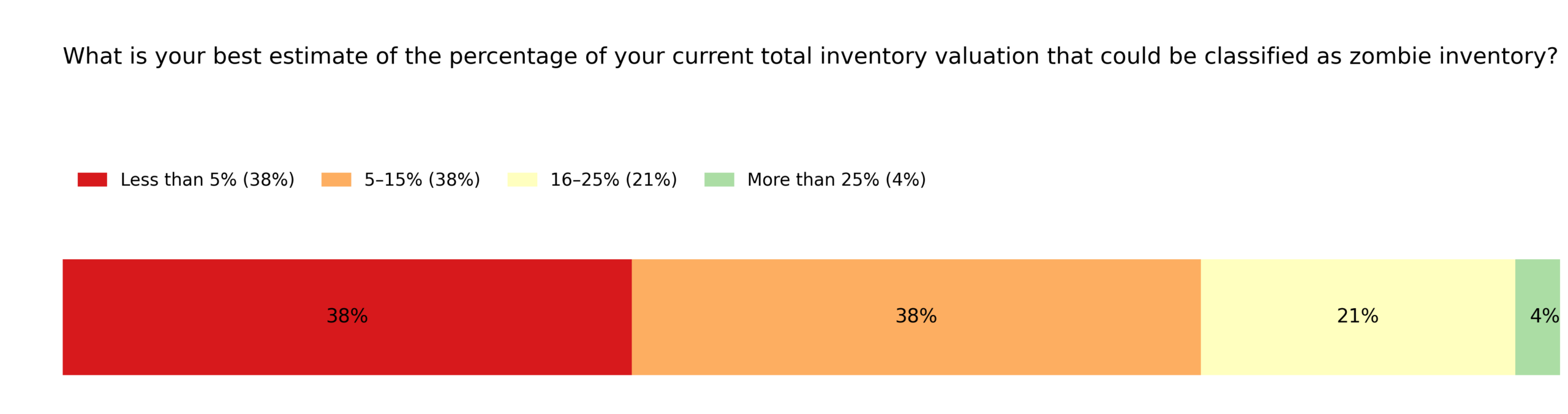
The qualitative feedback suggests that these levels are not always unintentional. Several respondents described excess inventory as a byproduct of deliberate operating tradeoffs tied to production efficiency or service strategy. As one respondent noted, “We made a business decision to run minimum production runs…the tradeoff outweighs carrying a few extra months of inventory.”
The takeaway is that zombie inventory is often tolerated rather than accidental — at least until changing business conditions force companies to confront it.
We also asked our members, “What was the primary root cause of excess or obsolete inventory in your organization?”
Inadequate forecasting and planning emerged as the leading root cause of excess inventory, cited by half of respondents. By contrast, very few pointed to panic buying during shortages, suggesting that — at least for these respondents — today’s zombie inventory challenges are less about past crisis behavior and more about ongoing planning limitations.
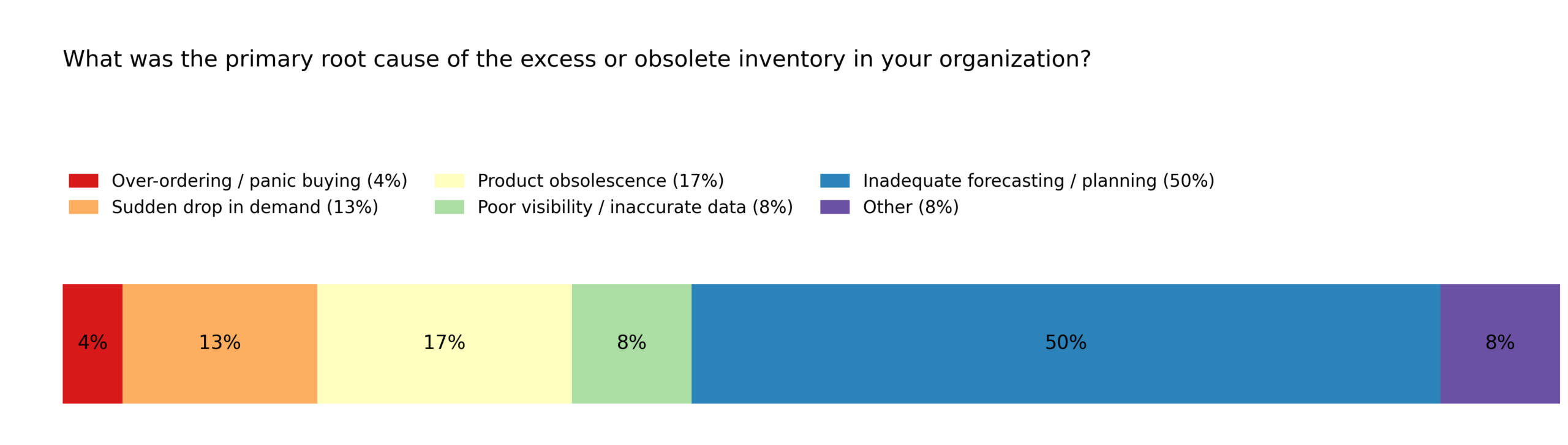
Respondent comments reinforce this pattern. Several respondents referenced immature or missing S&OP processes, fragmented systems, and limited demand visibility. One respondent summarized their environment bluntly: “We do not have an S&OP process. There is no demand planning.” While not statistically definitive, the consistency of these comments suggests that planning maturity remains a key factor in the accumulation of zombie inventory.
We explored other questions with our Indago members:
- What is the biggest internal barrier to liquidating or writing down zombie inventory?
- How significantly is slow-moving or obsolete inventory affecting your warehouse capacity and daily operations?
- How long do you expect it will take your organization to work through or dispose of this excess inventory?
Indago members can download the full report for insights on those questions. Not an Indago member? Learn more and apply today at joinindago.com.
So, how big is the zombie inventory problem?
At least among our Indago members, zombie inventory does not appear to be an overwhelming problem. However, the results suggest that when it does occur, it is often a symptom of planning and forecasting shortcomings. As one Indago executive commented, “Leadership finds it very hard to accept the facts on the ground — that this obsolete inventory will continue to be a drag on the business.” And that drag is measured not only in dollars, but also in warehouse space, management attention, and operational resources.
Simply put, zombie inventory is a costly problem, regardless of its size.